
Not Just Any Scale: Choose One with ‘Weight’ !
An illusion of the economy
Cheap scales may give the illusion of initial savings, but the low price often reflects inferior quality components and manufacturing technology. This often translates into a negative impact on the efficiency of logistics operations.
Limited lifespan / Unexpected risks
Inferior materials and poor manufacturing processes can lead to a shorter lifespan for cheap scales. In the demanding environment of transportation and constant handling, this can become a major source of problems and unforeseen costs.
Hidden maintenance costs – an overwhelming disadvantage
Even though the initial cost may be low, cheap scales can have significant maintenance costs. Weak components and frequent repairs can lead to unexpected expenses, eclipsing the initial savings.
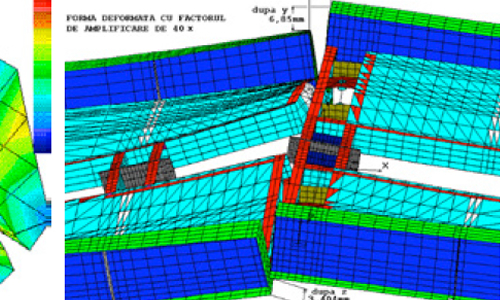
Even worse, major structural damage to the scale (example: truck scales) in the event of premature fatigue/physical wear of the material (see arrow* of the platform under maximum load) can lead to the need for a total replacement and purchase of a new scale.
Note *Platform Arrow – see glossary at the end of the article
In light of these risks, the initial investment in higher quality scales may seem wiser.
Purchasing after careful and well-documented research, focusing on durability and performance, the manufacturer’s experience, manufacturing capacity and quality, and the quality of the electronic components, can ensure the integrity and reliability of the weighing process in the long term and the efficiency of logistics operations.
Careful evaluation of long-term costs and benefits is essential to avoid the hidden pitfalls of cheap scales!
Case study / Example scale with “WEIGHT”
The high deadweight (mass) of a road scale is much more of an advantage than a disadvantage!
The high deadweight of a road scale can bring several advantages, especially in terms of its performance and durability. Here are some of these advantages:
- Increased durability: Road scales with a higher tare weight are often more robust and wear-resistant. This gives them a longer lifespan and requires less maintenance over time.
- Improved stability: The heavy weight of the road scale helps stabilize it on the ground. This stability is crucial for accurate and consistent measurements, especially with large vehicles and heavy loads.
- Vibration reduction: Additional dead weight can absorb and reduce vibrations caused by road traffic or other environmental disturbances. This contributes to more accurate weighing results.
- Resistant to environmental conditions: A heavy weight can help the road scale better withstand environmental conditions such as strong winds, extreme temperatures, corrosion. This resistance increases the reliability of measurements, regardless of weather conditions. It is important to emphasize that the advantages mentioned depend, to a large extent, on the overall quality of the road scale construction (quality of metal/concrete, sandblasting, welding, painting, etc.)
- Improved accuracy: With a solid foundation and increased dead weight, the road scale has a better chance of providing accurate and consistent measurements, eliminating unwanted fluctuations that could occur with lighter scales.
- Resistant to interference: Higher dead weight can help reduce external interference, such as vibrations and ground movement, which can negatively affect measurement accuracy in lighter scales.
- Stability over time: With a high dead weight, quality structure and materials, and an execution project designed with the best business practices in mind, the road scale can remain stable and functional in the long term, having a greater resistance to wear and tear and degradation compared to lighter scales.
FLINTAB, with satisfaction, can present countless cases of road scales that have elegantly exceeded the 25-year life expectancy
Disadvantages of a “ WEIGHT ” scale :
- Installation costs: a heavier road scale may require
more robust foundations and structural support for installation, implying higher initial costs and a more complex process. - Transport and Handling: Transporting and handling a scale with a high dead weight can be more difficult and expensive, requiring specialized equipment and transportation methods.
We wish and suggest that you correctly assess the decision to purchase a scale with “WEIGHT” and do not underestimate the trap of the lowest price! - GLOSSARY:
With comparable sets of electronics and related services, the weighing platform is the first to make a difference. The weighing platform is the “emblem” of the entire system. - CLC C DTA R DIN 8119 1045
CLC (Concentrated Load Capacity) is an internationally recognized industrial indicator and is the value specified by the manufacturer of road scales (and in the USA measured and verified in metrological tests) that defines the maximum concentrated load capacity of the axle groups for which the road scale platform has been designed. CLC measures the ability to weigh concentrated loads in relatively small areas of the scale platform. A high CLC value determines a long service life with intact metrological performance. A low CLC value leads to a metal saving of 15..30%.
- SF – Safety Factor
Safety Factor (Safety Factor) In design calculations, allowable resistances are used in relation to the breaking strength of the material. This ratio, called the safety factor SF, measures the intensity of traffic on the platform of a road scale. - FEA – Finite Element Analysis
FEA (Finite Element Analysis) measures the critical stress factors virtually on each component of the load-bearing structure under the most unfavorable load conditions of the scale, thus obtaining the areas with a high potential for damage risk or premature wear. Finite element analysis allows optimizing the metal/concrete consumption necessary to manufacture the weighing platform without affecting its strength and places the structure in the certain area of technical safety and long service life.

- f – Platform deflection
Platform deflection under maximum load: “f” measures the stiffness is measured by the platform deflection under maximum load and the cumulative metal fatigue caused by repeated elastic deformations of the supporting structure is a determining factor in the life of the bridge. The actual measured deflection of a platform must be specified and guaranteed by the manufacturer. - H – Platform Height
A low deck height, known as a “low-profile” structure, determines low and short ramps, optimizing the space in which the platform is located.
At the opposite pole, with a metal saving of 15..30%, a high deck height practically doubles the height and length of the ramps, with high construction costs and waste of space.